Power Asymmetry in Doctor-Patient Interactions

By Carrie Chan

As citizens, we must have had certain experience in medical encounters or interactions in our daily lives. In institutional talks like business meetings, doctor-patient talks and political interviews, ‘institution’, ‘discourse’ (language) and ‘power’ are interconnected and language serves as the ‘principal means by which organizational members create a coherent social reality that frames their sense of who they are’ (Fairclough & Wodak, 1997, p. 181). Besides, every participant in institutional talks possesses specific goal orientations in order to match with their social roles. However, we might not be aware of the fact that power asymmetry does exist during the interactions since linguistic resources are employed in the process to make the power differences seem ‘pre-inscribed’. In that case, we as patients are usually at a more ‘inferior’ position while the doctors are more powerful since they possess the professional knowledge in medical science.

In fact, in the realm of language and power, a combination of Conversation Analysis (CA) which studies talk-in interactions at a micro-level as well as Critical Discourse Analysis (CDA) which places the emphasis on describing, detailing and analysing linguistic features during talks could be used to help unfold the ‘generally hidden determinants’ during social interactions (Simpson et al., 2018). With these two methods, some common linguistic features that demonstrate the power asymmetry are found in doctor-patient interactions. They are ‘Topic control’, ‘Enforcing explicitness’, ‘Interruption’ suggested by Fairclough (1989, pp. 135-137) and a rhetorical device called ‘hedging’.

Topic Control

During the consultation, the doctor is usually the one controlling the sequences using a cycle of questions to elicit responses from the patient and the patients are bound to answer them. When answering these ‘closed’ questions asked by the doctors, the patients’ contributions are restrained since they are limited to say ‘Yes’ or ‘No’ or give brief responses.

Enforcing Explicitness

Patients as the less powerful speakers are usually asked to disambiguate the responses, explain with further details and make the ‘vague’ answers explicit. In order to cooperate and meet the social goals, the patients have to provide a clarification and be enforced to describe their conditions as requested by the doctors.

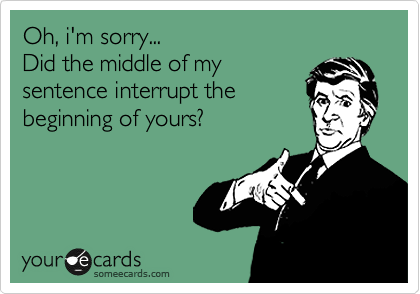
Interruption Interruption indicated by speech overlaps is also commonly found in everyday talks as well as doctor-patient interactions and it is somehow regarded as ‘normal’ and ‘natural’. For example, when a patient is making his turn or answering the doctor’s question, the doctor may interrupt without allowing him or her to finish the turn since the doctor knows what might be an ‘adequate’ answer for him to do the diagnosis.

Hedging

Apart from the above three devices, ‘Hedging’ is a linguistic device used by the patient where a mitigating word is used in the utterance to soften the tone or certainty (Brown & Levinson, 1987). Sometimes when patients are describing their conditions, words such as “I think” or “like” are used to hedge their speeches. Even though the patients possess the ‘superior knowledge’ about how they feel, they still choose to hedge the speech by uncertainty markers to downplay the certainty without ‘challenging’ the doctor whom they think possess professional knowledge in giving diagnosis.

From the above devices identified in doctor-patient interactions, it is shown that they serve as good examples that illustrate how power asymmetry is being ‘naturalized’ in institutional talks. Even patients possess ‘superior knowledge’ of how they feel, they would still align with the mainstream thinking that doctors are the more powerful figure during the interactions since they have professional recognition in medical science. Through critically picking out details from the above talk-in interactions, asymmetrical speaking rights, obligations and power differences in institutional talks could be brought to light.  

The Power Imbalance between Doctors and Patients in the Medical Setting: A case study

By Rachael Lee

There is no doubt that everyone has the experience of visiting a doctor and not every visit is pleasant. Some frustrating situations a patient may encounter include not having a chance to ask questions, doctors having a cold tone and so on.  Yet, the communication between the patient and the doctor is important as through effective communication, the patient can tell how s/he is feeling and the doctor can make the diagnosis accordingly. A breakdown of communication during consultations is undesirable and should be avoided as it would affect the doctor’s diagnosis and the patient’s recovery. It is also regarded as one of the major causes of medical malpractice. Knowing the importance of effective communication between the doctor and the patient, we are going to look into the power imbalance reflected in the medical discourse by analyzing a video recording of a patient’s medical appointment. 

Youtube link (00:00-3:27) https://www.youtube.com/watch?v=tWFVT-fUafQ&t=361s

The consultation could be broken down into three stages: questioning, physical examination and follow up. 

1. Questioning

a. Question-answer sequence- adjacency pairs 

At the beginning of the consultation, doctors would start by asking the patient some questions regarding his/her symptoms. This kind of question-answer sequence is regarded as adjacency pairs, which are utterance produced by two speakers in a turn-taking base. One of the examples of adjacency pairs from the video would be:

Doc:     Well have you still got phlegm?  

H:         Hmm yes

Doc:     Yellow?

H:         Well, yellowy greeny 

b. Topic control

Patients usually would raise their concerns at the questioning stage. However, doctors have the power to deicide whether they want to develop the issue raised by the patient or not. The doctor can temporarily put aside the question-answer sequence to address the patient’s concern or simply dismiss it. This is regarded as topic control, which is one of the tactics used by a more powerful group in a conversation in an institutional setting. 

(Photo retrieved from: https://media.tenor.com/images/745a80469a59da413c6f35c5a8b1f8be/tenor.png)

c. Interruptions


As mentioned earlier, patients would raise their concern during the questioning stage. Apart from not addressing the newly raised issue, doctors can interrupt the patient when s/he is speaking and direct him back to the original question-answer chain if doctors find it irrelevant. One of the examples in the video shows that the doctor, who is the dominant speaker, ignores the patient’s contribution.

Doc:     Any blood? 

H:         Hmm..well..it really look…

Doc:     Any blood?  

H:        Hmm no

(Photo retrieved from: https://cdn.someecards.com/someecards/usercards/1327152439536_7131458.png)

2. Physical examination

a. Online commentary

When the doctor is physically examining the patient, they would provide comments in which they assess and evaluate some physical signs and such commentary is regard as online commentary. These online commentaries are used to forecast a “no problem”. 

Sometimes, during the examination, the patient would try to offer his/her explanation by using “do you think…”. Patients show tentativeness about the explanation they suggested as they are aware of their subordinate position and the doctor’s professional role. 

H:         Do you think it is bronchitis? 

Doc:     Sorry?

H:         Do you think it is bronchitis

b. Subject of examination 

The power imbalance is conveyed through presenting the patients as objects to be inspected, examined and manipulated by doctors. In the video, the doctor treated the patient like an object by turning the patient around without asking and neglecting her feelings by asking her to take off her top while the doctor can continue his process by only lifting her shirt up.

3. Follow up 

a. Pre-closing moves 

Doctors would have some pre-closing moves to suggest it is almost the end of the consultation. These pre-closing moves include making arrangements for tests and scheduling for a next visit if necessary. It is worth noting that sometimes the patient would subtly hint the doctor to influence the doctor’s prescription. 

Although the patient is aware of his/her subordinate state, these actions can be seen as them bargaining for power and trying to take control of some aspects for instance having prescribed more antibiotics or having a diagnostic test

To conclude, there is a power imbalance between doctors and patients in the medical discourse, as doctors have more power and authority due to their social status and professional medical knowledge. Yet, such asymmetrical talk within the institute is not beneficial to the patients and doctors should encourage patients to express their feelings to achieve effective communication.